Metal Braces
Metal brackets are the traditional and most common form of fixed orthodontic treatment.
They are durable, precise and suitable for both simpler tooth alignment and more complex bite correction.
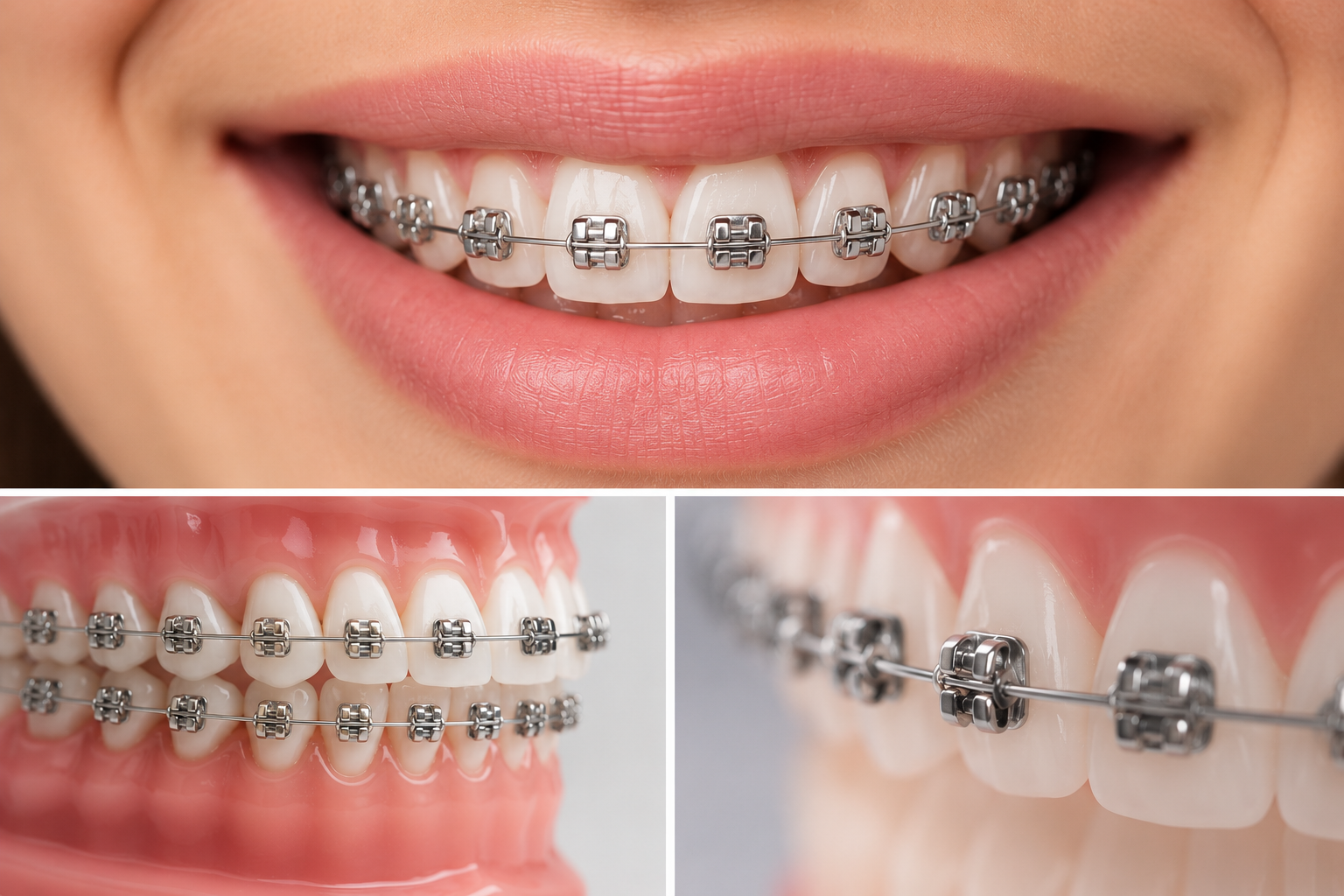
What are metal brackets?
Metal brackets are small attachments bonded to the front of the teeth and connected by an orthodontic archwire.
The archwire applies controlled pressure to the teeth and gradually moves them towards their planned positions.
Modern metal brackets are smaller and more comfortable than many older systems.
Who are metal brackets suitable for?
Metal brackets can be used for most types of tooth and bite problems.
They may be suitable for:
crowded teeth
spaces between the teeth
rotated or misaligned teeth
overbite or underbite
deep bite or open bite
asymmetry
more complex tooth movements
They are particularly suitable when precise control and durable appliances are more important than making the braces as discreet as possible.
Advantages
Metal brackets provide:
precise control of tooth movement
durable and reliable appliances
treatment of complex bite problems
efficient transfer of forces to the teeth
continuous treatment throughout the day
usually a lower cost than ceramic alternatives
How does the treatment work?
The brackets are bonded to the teeth and connected with an orthodontic archwire.
During regular appointments, the archwire is adjusted or replaced so that the teeth move gradually and in a controlled way.
Treatment may also include elastics, springs, temporary anchorage devices or other appliances when necessary to correct the bite.
Is the treatment painful?
It is normal to experience pressure or tenderness for the first few days after the braces are fitted or adjusted.
The brackets may also irritate the lips or cheeks at first. This usually improves as the mouth becomes accustomed to the appliance.
Orthodontic wax can be used if an area causes irritation.
Oral hygiene
Thorough cleaning around the brackets, archwire and gums is important throughout treatment.
Poor cleaning may lead to gum inflammation, staining or early enamel damage.
You will receive individual instructions on the use of a toothbrush, interdental brushes and other cleaning aids.
Food and daily habits
Hard or sticky foods can damage the brackets or archwire.
Avoid biting directly into very hard foods and cut food into smaller pieces when necessary.
Contact the clinic if a bracket becomes loose or the archwire causes significant irritation.
After treatment
When the braces are removed, retainers are required to stabilise the result.
This may include a fixed retainer behind the teeth, a removable retainer or a combination of both.
Retention is necessary to reduce the risk of the teeth moving back.
First assessment
During the first assessment, we examine your teeth, bite and treatment needs.
You will receive information about whether metal brackets are suitable for you, possible alternatives, expected treatment time and price.