Snoring, sleep apnea and orthodontics
When should you see your GP—and what can MARPE actually contribute?
Many people contact an orthodontist because they snore, have difficulty breathing through their nose, or have read that widening the upper jaw may improve breathing. A narrow upper jaw can be relevant in selected patients, but snoring and sleep apnea have several possible causes and cannot be diagnosed from an orthodontic examination alone.
Start with your GP
Snoring does not necessarily mean that you have sleep apnea. If someone has observed pauses in your breathing, or you experience gasping during sleep, pronounced snoring, morning headaches or daytime sleepiness, you should first contact your GP.
Your GP can assess whether further investigation is needed. In Norway, sleep apnea is mainly investigated by ear, nose and throat or pulmonary specialists, usually with respiratory polygraphy or polysomnography.
CBCT scans, cephalometric radiographs, photographs of the throat or the finding of a narrow palate cannot confirm or exclude sleep apnea.
Sleep apnea is more than a narrow airway
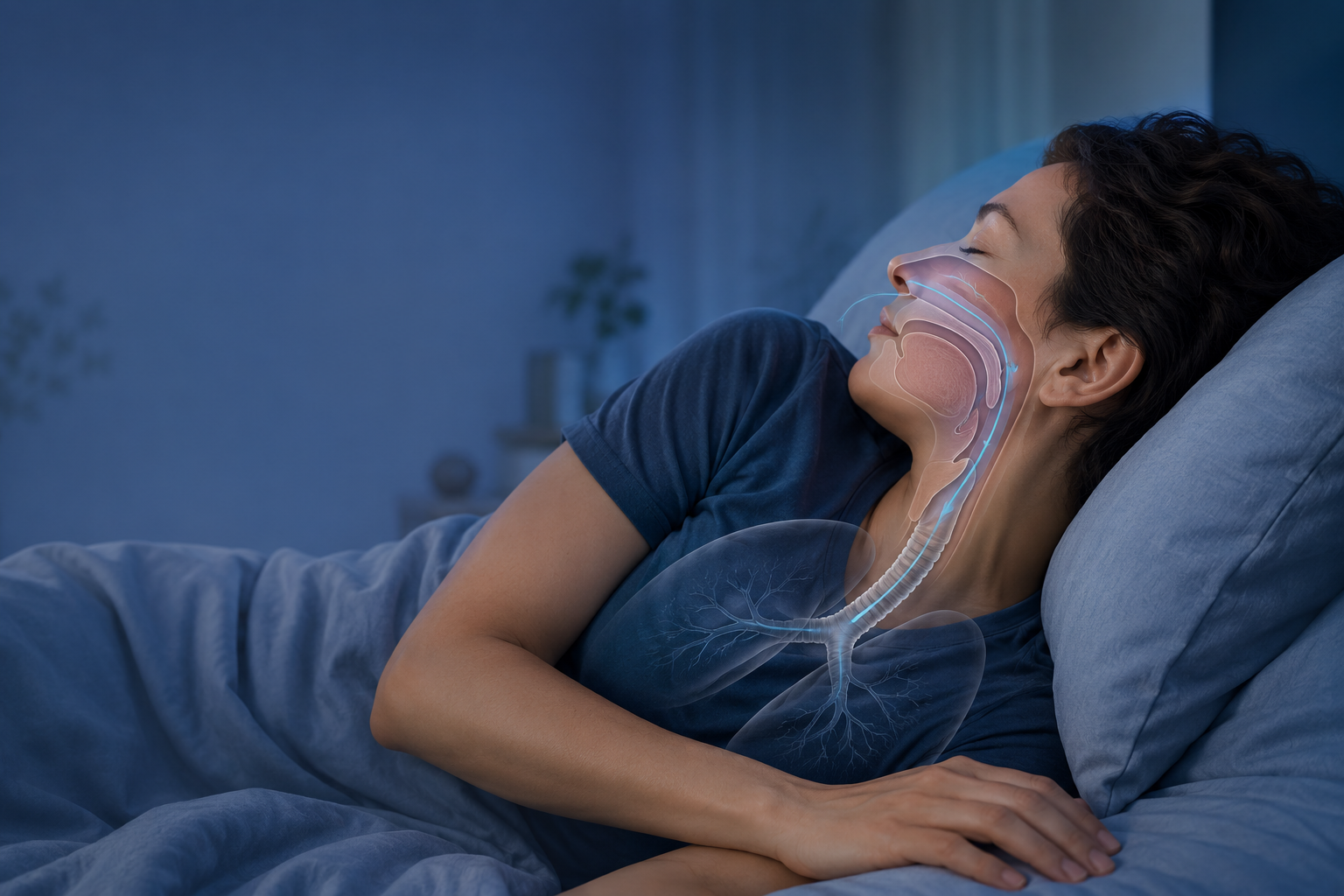
In obstructive sleep apnea, the airway in the throat repeatedly narrows or collapses during sleep. Several mechanisms can contribute:
airway anatomy and collapsibility
the response of the upper-airway muscles during sleep
the stability of the brain’s control of breathing
how easily a person wakes in response to disturbed breathing
The combination differs between patients. A treatment that changes anatomy alone therefore cannot be expected to solve the problem for everyone.
Nasal obstruction is not the same as sleep apnea
Nasal obstruction can make nasal breathing more difficult, contribute to snoring and reduce tolerance of CPAP. Improving the nasal airway may therefore be helpful, but treatment of the nose alone is not an established general treatment for sleep apnea.
Persistent difficulty breathing through the nose should be assessed by a GP or an ENT specialist.
Can MARPE treat sleep apnea?
MARPE is primarily used when there is a genuinely narrow upper jaw, crossbite or documented transverse discrepancy between the jaws. It can widen the nasal cavity and may reduce nasal airflow resistance in some patients.
Small studies in carefully selected adults have reported possible improvements in breathing measurements and symptoms. However, the evidence remains limited, mainly short-term, and insufficient to recommend MARPE as a routine or first-line treatment for sleep apnea.
An increase in airway volume on a CBCT scan does not demonstrate that sleep apnea has been treated. This requires repeat objective sleep testing.
In children, the evidence is also insufficient to recommend expansion solely to treat or prevent sleep apnea. Treatment should have a clear orthodontic indication.
What can an orthodontist contribute?
An orthodontist can assess tooth position, the bite, jaw width and craniofacial relationships. When sleep apnea has already been medically diagnosed, dental or orthodontic treatment may form part of multidisciplinary care in selected patients.
A mandibular advancement device is an evidence-based treatment for some patients, but it is not the same as an ordinary night guard and should be used following medical diagnosis and with objective follow-up of treatment effectiveness.
My recommendation
If you experience snoring, breathing pauses, nasal obstruction or pronounced daytime sleepiness, contact your GP first. If you also have a narrow upper jaw, crossbite or another orthodontic problem, this can be assessed separately.